Top 10 Benefits of Using Pneumatic Ball Valves in Industry?
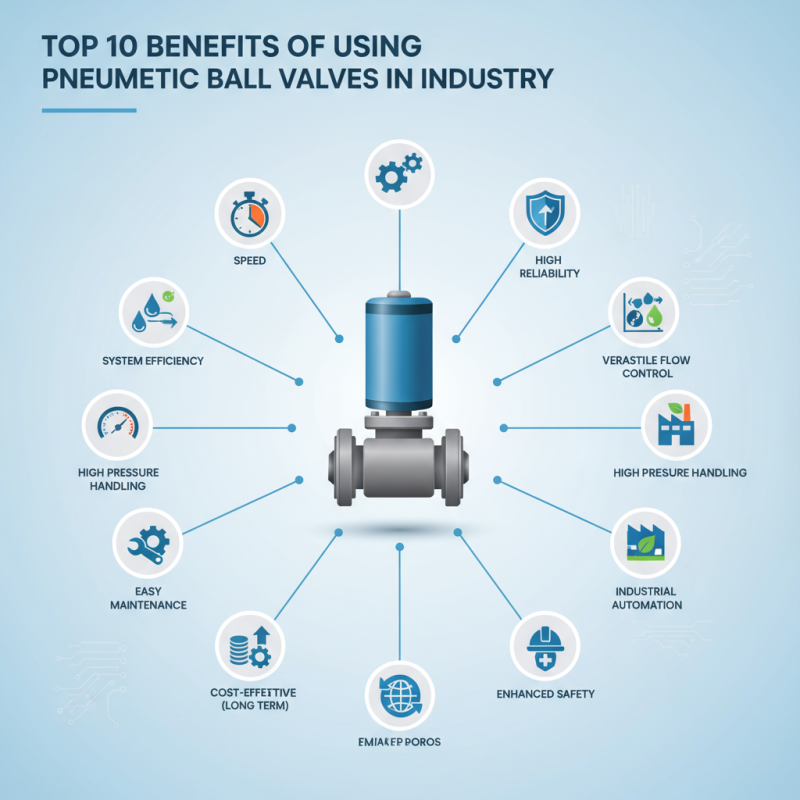
In the world of industrial automation, a pneumatic ball valve plays a crucial role. These valves manage the flow of gases and liquids efficiently. Their design focuses on quick operation and high reliability. Industries benefit significantly from using these valves.
One major advantage of pneumatic ball valves is their speed. They can open or close rapidly with minimal effort. This feature enhances overall system efficiency. However, not every application may need such quick action. It is essential to evaluate the specific requirements of each system.
Another benefit is their ability to handle various pressures. Pneumatic ball valves can withstand high pressure, making them versatile. Yet, durability can be a concern. Some lower-quality valves may wear out faster than expected. Investing in high-quality valves for critical applications is vital.
Key Advantages of Pneumatic Ball Valves in Industrial Applications
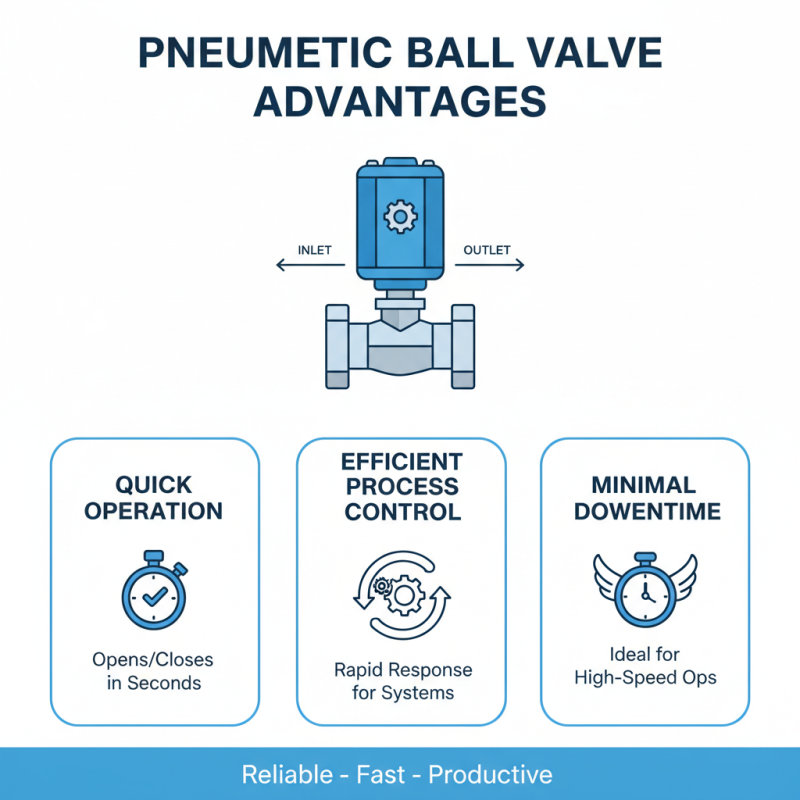
Pneumatic ball valves offer numerous advantages in industrial applications. One key benefit is their quick operation. These valves can open and close in seconds, leading to efficient process control. They work well in high-speed operations, ensuring minimal downtime.
Another significant advantage is their reliability. Pneumatic ball valves operate with simple mechanisms, reducing the risk of failures. With fewer moving parts, they require less maintenance. However, this simplicity can also lead to oversight during the inspection process. Regular checks are essential to prevent unexpected malfunctions.
The compact design of pneumatic ball valves allows for versatile installations. They fit well in tight spaces, making them ideal for various setups. This flexibility is a plus for industries with space constraints. Nevertheless, the installation process can be tricky and may require careful planning. Users might overlook the need for proper alignment, which could cause issues later on.
Enhanced Control and Precision in Fluid Regulation with Pneumatic Ball Valves
Pneumatic ball valves are vital for precise fluid regulation in various industries. They offer enhanced control, making it easier to manage flow rates and pressure. This precision is achieved through their design, which allows rapid opening and closing. Operators can quickly adjust settings, ensuring optimal performance in processes.
With a simple mechanism, these valves minimize risks of leaks and failures. They operate smoothly, ensuring a steady flow. However, improper installation can lead to issues. Regular maintenance is essential. Ignoring this can cause significant delays in operations. Employees must be trained to handle these valves correctly.
In reality, achieving perfect precision is challenging. Factors like temperature and pressure changes can affect performance. Workers must continually monitor systems to ensure they operate within expected parameters. This constant attention to detail can be demanding, but it's essential for maintaining efficiency and safety.
Increased Durability and Reliability of Pneumatic Ball Valves in Harsh Environments
Pneumatic ball valves are gaining popularity in various industries. They offer increased durability and reliability, especially in harsh environments. These valves are designed to withstand extreme temperatures, corrosive substances, and high-pressure conditions. This robustness ensures safe and efficient operation.
In many cases, solutions are not one-size-fits-all. Sometimes, the extreme environment can challenge the valve’s performance. However, employing pneumatic ball valves minimizes these risks. Their construction usually includes sturdy materials that resist wear and tear. This means fewer replacements, saving valuable time and resources.
Operators appreciate the quick response time of these valves. They can open and close rapidly, providing precise flow control. However, the installation process can sometimes be tricky. Correctly calibrating the air pressure is crucial. A slight error may lead to reduced performance. Therefore, attention to detail in both installation and maintenance is essential for optimal functionality.
Higher Efficiency and Reduced Energy Costs with Pneumatic Ball Valve Systems
Pneumatic ball valves are widely recognized for their efficiency in various industrial applications. These valves utilize compressed air to operate, which allows for quick and precise control of fluid flow. One significant advantage is the reduced energy costs associated with their use. By optimizing the valve's operation, industries can see a noticeable decrease in energy consumption over time.
Another benefit is the quick response time of pneumatic systems. When controlling large processes, this rapid activation can lead to increased productivity. However, it's essential to consider maintenance. While these systems are efficient, they require regular checks to ensure they operate smoothly. Neglecting maintenance can lead to unexpected downtimes, which may negate the initial energy savings.
Moreover, these valves tend to be more compact than traditional models. Their design allows for easy integration into existing systems. This compactness also contributes to reduced installation time and costs. Despite these benefits, the reliance on compressed air can sometimes lead to inefficiencies. If the air supply is inconsistent, it can impact the performance of the pneumatic valve. Balancing these factors is crucial for maximizing efficiency and minimizing costs.
Simplified Maintenance and Operation of Pneumatic Ball Valves in Industry
Pneumatic ball valves are gaining popularity in various industries. Their design simplifies maintenance and reduces downtime. Easy operation is crucial for efficient workflows. These valves generally feature a straightforward mechanism. This makes them easy to install and troubleshoot.
Regular maintenance is vital, yet pneumatic ball valves require less of it. Often, only periodic inspections suffice. This aligns well with operational demands. They enable quick repairs. Sometimes, users might overlook minor issues, leading to unexpected challenges. A proactive approach can mitigate these problems.
Another aspect to consider is the training of staff. While these valves are user-friendly, unfamiliarity can lead to errors. Comprehensive training can enhance operational efficiency. Staff should be encouraged to ask questions. Sharing experiences can often reveal unanticipated challenges. Refining maintenance protocols can improve performance over time.