Why Choose Hardware BMS for Your Battery Management Needs?
In today’s technology-driven world, the demand for efficient battery management solutions has surged. Choosing the right system is crucial for performance and safety. Among the various options available, Hardware BMS stands out for its reliability and precision. This system directly integrates with battery packs, ensuring each unit is monitored, controlled, and maintained effectively.
Hardware BMS provides real-time data, helping users understand battery conditions instantly. Its capability to prevent overcharging and overheating enhances safety significantly. By prioritizing hardware-based management, you minimize risks associated with software vulnerabilities. Yet, it’s essential to remember that no system is flawless. Users must regularly maintain and update their Hardware BMS for optimal performance.
Investing in a Hardware BMS can elevate battery performance. However, it requires careful consideration and analysis of specific needs. Reflecting on your requirements can lead to better choices. Ultimately, a well-implemented Hardware BMS ensures longevity and efficiency for battery systems.
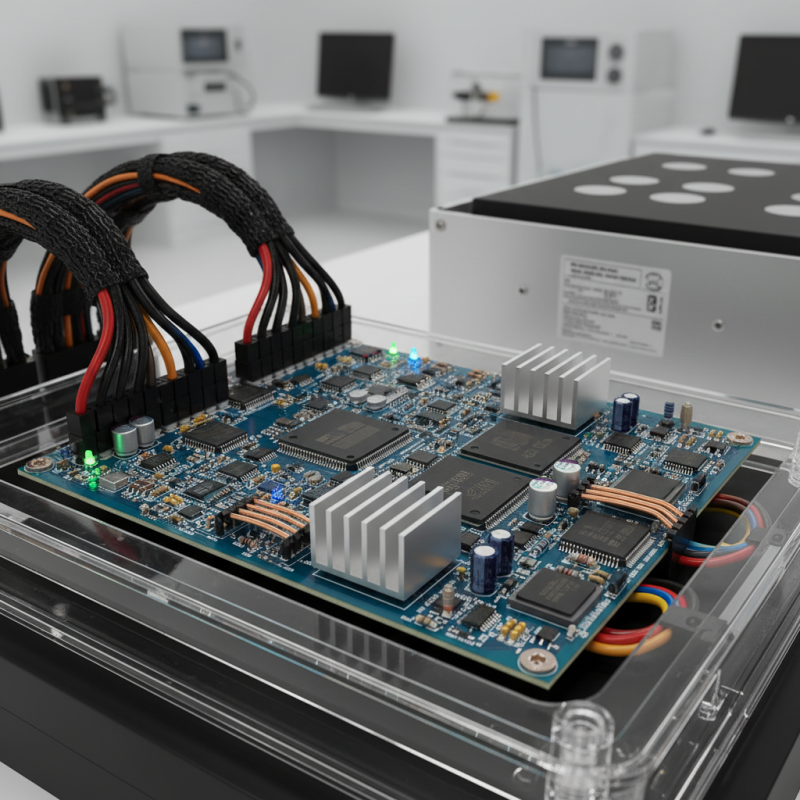
Advantages of Hardware BMS Over Software Solutions in Battery Management
When considering battery management systems (BMS), hardware solutions stand out for various reasons. Hardware BMS utilizes dedicated circuitry for monitoring. This approach ensures real-time data collection and immediate response to battery conditions. Software solutions, while flexible, might suffer from delays in data processing. This lag can lead to inefficiencies in battery life management.
One key advantage of hardware BMS is reliability. These systems often operate independently of external software updates. They provide continuous function even in low-power situations. Software-based systems might struggle without constant power or connectivity. This reliability can be crucial in high-stakes environments like electric vehicles or renewable energy storage.
Tips: Regularly inspect BMS connections. Ensure components are clean and secure for optimal performance. Testing the system in different conditions can identify hidden weaknesses.
Cost is another factor to consider. Hardware BMS may require a higher initial investment. However, the long-term reliability often offsets this cost. Finding a balance between initial outlay and future savings is essential. Understanding the unique needs of your battery application will guide your choice.
Key Features of Robust Hardware BMS and Their Impact on Performance
When deciding on a Battery Management System (BMS), hardware options stand out due to key features that enhance performance. Robust hardware BMS typically includes over-voltage and under-voltage protection, which safeguards battery cells from extreme conditions. This feature helps in prolonging battery life and optimizing charging cycles. The physical hardware design often supports effective heat dissipation, a crucial aspect for maintaining a stable operation.
Another significant aspect is the real-time monitoring capability. A strong hardware BMS enables constant tracking of battery parameters. This includes voltage, current, and temperature, providing crucial data for users. Receiving alerts on anomalies can prevent potential failures. Moreover, hardware-based solutions often come with improved scalability, accommodating varied applications from electric vehicles to renewable energy storage.
However, opting for hardware BMS also requires careful consideration. The initial costs can be higher than expected. Installing and integrating these systems might demand specialized knowledge. Thus, investing time in research is essential. Balancing performance with practical implementation will ensure that users maximize benefits while avoiding potential pitfalls.
Industry Trends: The Growing Adoption of Hardware BMS in Electric Vehicles
The electric vehicle (EV) market is rapidly evolving, and hardware Battery Management Systems (BMS) are becoming essential. These systems enhance safety and efficiency in battery usage. They monitor cell temperatures, voltage levels, and health status, ensuring optimal performance and longevity. This proactive management reduces risks like overheating and extends battery life. Enhanced reliability in hardware BMS is a top reason for their growing popularity.
As automakers integrate sophisticated technology, a shift towards hardware BMS is noticeable. This shift reflects a need for systems that not only collect data but also process it in real-time. Hardware solutions often outperform their software counterparts in terms of speed and accuracy. However, the transition isn’t without challenges. There are concerns regarding integration complexities and hardware costs. Businesses must weigh the benefits against these concerns to make informed decisions.
The future of EVs relies on superior battery technologies. Hardware BMS plays a crucial role in this landscape. Emphasizing both efficiency and safety, these systems will likely shape the next generation of electric vehicles. However, companies need to navigate potential pitfalls in implementation. Understanding the broader implications of adopting hardware BMS is vital for sustainable growth in the EV industry.
Case Studies: Successful Implementations of Hardware BMS in Energy Storage
The adoption of Hardware Battery Management Systems (BMS) in energy storage solutions has gained significant traction. Case studies highlight their effectiveness across various projects. For instance, a recent project demonstrated a 20% increase in battery life due to improved thermal management provided by Hardware BMS. This enhancement is crucial, as optimal temperature regulation can significantly prolong the operational lifespan of batteries.
Another successful implementation was seen in a utility-scale energy storage facility. Here, Hardware BMS allowed real-time monitoring and analytics, leading to a reduction in operational costs by 15%. Accurate data collection ensured that maintenance was scheduled proactively, minimizing downtimes. However, integrating such systems is not without challenges. Many facilities face legacy system compatibility issues that can hinder the transition.
Many implementations revealed that, while Hardware BMS improves efficiency, it can introduce complexity. Staff training and system updates become priorities. Flaws in initial deployments can lead to miscommunications between components. Thus, businesses must prioritize comprehensive planning and testing phases to address potential obstacles and maximize the benefits of Hardware BMS effectively.
Comparative Analysis: Cost Efficiency of Hardware BMS in Long-Term Operations
The cost efficiency of hardware Battery Management Systems (BMS) is increasingly recognized in the energy sector. Research indicates that hardware BMS can reduce operational costs by up to 25% over time. This savings primarily arises from improved battery life and lower maintenance expenses. Studies show that a well-designed hardware BMS can extend battery life by over 30%. This means fewer replacements and enhanced investment returns.
Tips: Monitor your battery temperature regularly. Extreme temperatures can affect efficiency.
A comparative analysis highlights the reliability of hardware BMS beyond initial costs. Reports suggest that systems with advanced safety mechanisms experience fewer operational failures, enabling continuous performance. For instance, the International Energy Agency notes that systems using hardware BMS reduce downtime by 40%. This reliability translates to better productivity in industrial applications.
Tips: Consider the long-term impacts of your BMS choice. A slightly higher initial investment can lead to substantial savings down the road.
The complexity in selecting BMS models reflects industry challenges. Not all installations are the same, and hardware BMS can sometimes be more complex. Users may face hurdles adapting older technology, which can complicate setup. Balancing these complexities with the benefits is crucial for maximizing efficiency in energy management.
Cost Efficiency of Hardware BMS in Long-Term Operations