How to Choose the Right Cold Rolled Coil for Your Project?
Choosing the right Cold Rolled Coil for your project can be challenging. The variety of options available can be overwhelming. Cold rolled coil is commonly used in various industries, including automotive and construction. Understanding your project's specific needs is crucial.
Quality matters when selecting cold rolled coil. Consider factors like thickness, width, and surface finish. The wrong choice can lead to issues during manufacturing. Pay attention to the specifications. For example, a thinner coil might not meet your strength requirements.
Moreover, it's important to reflect on your supplier's reliability. Not every supplier offers the same quality. Research different options and their histories. Sometimes, spending more guarantees better results. In this article, we will explore how to make informed choices about cold rolled coil.
Understanding Cold Rolled Coils: Definition and Characteristics
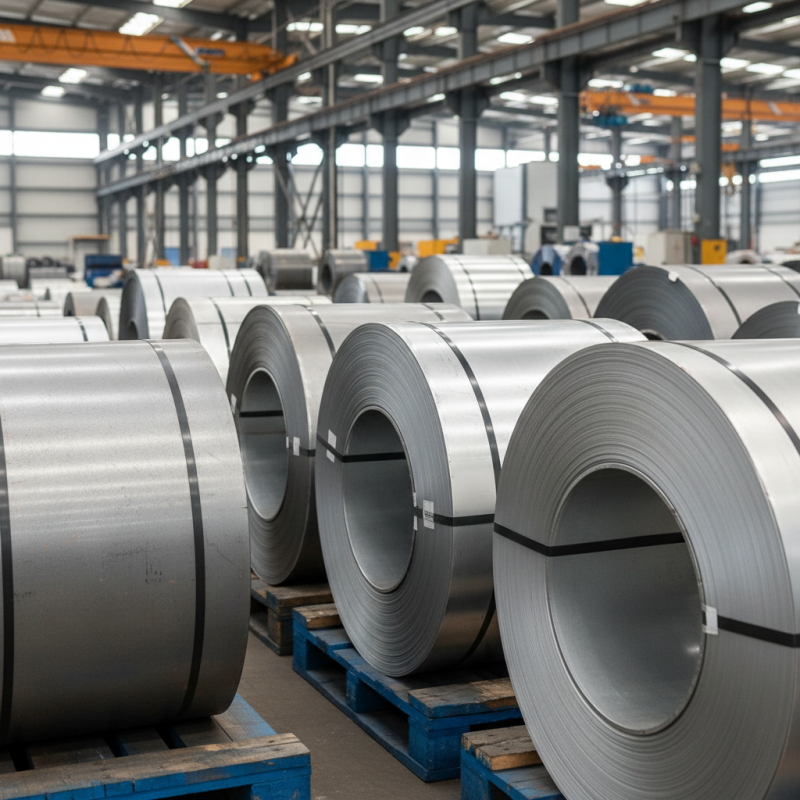
Cold rolled coils are essential in various manufacturing sectors. They are produced by repeatedly rolling steel at room temperature, which enhances dimensional accuracy. This process makes the final product smoother and more uniform. Cold rolled coils exhibit better surface quality compared to hot rolled ones. They also have superior strength due to the strain hardening effect.
These coils are characterized by specific traits. The thickness ranges typically from 0.2 mm to 3 mm. Cold rolled steel also has precise tolerances, aiding in complex fabrication processes. However, users must consider that cold rolled coils can be more brittle. In some cases, they may require additional treatment to improve their workability.
Choosing the right coil involves evaluating your project's needs. Look at the thickness, strength, and surface finish required. You might find that a particular characteristic is lacking. It's often helpful to consult with professionals for guidance. Understanding these properties can save time and resources in the long run.
Identifying the Key Applications for Cold Rolled Coils in Projects
Cold rolled coils are essential in various applications. They are widely used in the automotive industry. A recent report shows that around 20% of cold rolled steel is consumed by this sector. The need for precision and strength in vehicle components drives this demand.
In construction, cold rolled coils are preferred for structural beams and frames. These materials offer superior surface finish and dimensional accuracy. According to industry analysis, construction accounts for nearly 30% of the total cold rolled steel market. This highlights the material's importance in building energy-efficient structures.
However, choosing the right coil can be challenging. Specifications vary, and not all coils suit every project. Factors like thickness, hardness, and finish matter greatly. A miscalculation can lead to weaknesses in the final product. Many industries still struggle with these nuances. Understanding the specific requirements of each application is critical for achieving optimal results.
Key Applications for Cold Rolled Coils
This bar chart illustrates the key applications for cold rolled coils, highlighting their usage percentage across various industries. The automotive sector leads with 35%, followed by construction at 25% and appliances at 20%.
Factors to Consider When Selecting Cold Rolled Coils
Selecting the right cold rolled coil involves several factors. Material properties are crucial. The yield strength and tensile strength of the coil must match project requirements. For example, a report by the American Iron and Steel Institute states that high-strength coils can provide better performance in structural applications. Proper testing of these properties can prevent future failures.
Thickness also matters. Cold rolled coils come in various thicknesses. Choosing the right thickness affects formability and strength. A study by the International Journal of Materials Science indicates that even small thickness variations can impact durability. Ignoring this can lead to costly mistakes.
Surface finish should not be overlooked. The finish can influence both aesthetics and corrosion resistance. A rougher finish may require extra processing, increasing costs. Reports show that a smooth finish is often preferred in visible applications. It’s essential to review these characteristics before making a decision.
Comparing Different Grades and Types of Cold Rolled Coils
Choosing the right cold rolled coil for your project involves understanding various grades and types. Each grade has distinct properties that affect performance. For example, a low-carbon coil offers excellent ductility, while high-carbon coils are stronger but less malleable. Knowing your project's requirements helps in making the right choice.
Tips: Always consider the intended application. Make a list of essential properties like tensile strength and corrosion resistance. This will guide your selection process.
Different types, such as full hard and annealed coils, highlight the importance of surface finish. Full hard coils are ideal for applications requiring high formability. Annealed coils, on the other hand, provide better control over mechanical properties. But selecting between them isn’t always straightforward.
Tips: Check the specifications carefully. Look for test reports if possible. The right technical data can save time and resources in the long run.
How to Choose the Right Cold Rolled Coil for Your Project? - Comparing Different Grades and Types of Cold Rolled Coils
| Grade | Thickness (mm) | Width (mm) | Tensile Strength (MPa) | Typical Applications |
| SPCC | 0.5 | 1000 | 270 | Automotive Parts |
| SUS304 | 0.7 | 1200 | 520 | Kitchen Equipment |
| DX51D | 0.6 | 1250 | 300 | Construction, HVAC |
| CQ | 0.8 | 1500 | 310 | Industrial Applications |
Best Practices for Sourcing and Purchasing Cold Rolled Coils
When sourcing cold rolled coils, consider the specific requirements of your project. Assess factors such as thickness, width, and surface finish. Each project may have unique needs, so detailed information is crucial.
**Tip:** Always ask for samples before making a large order. This will help gauge the quality and specifications.
Pricing can vary significantly. Don’t settle for the first quote. Research several suppliers to find competitive rates. But be wary of deals that seem too good to be true. Quality often comes with a price.
**Tip:** Build relationships with suppliers. Trust can lead to better pricing and priority service.
Evaluate the supplier's reputation. Look for reviews or testimonials to understand their reliability. However, do not ignore negative feedback; it can reveal potential issues. Remember, not every supplier will meet your expectations perfectly.
**Tip:** Keep communication open. Clarify any uncertainties. It helps in avoiding misunderstandings later on.