What Are Micro Switches and How Do They Work?
micro switches are small yet crucial components found in many devices. They play an integral role in various applications, from household appliances to industrial equipment. Their design enables reliable operation in diverse settings. Understanding how micro switches work helps us appreciate their significance.
These switches operate with a simple mechanism. When pressure is applied, a small actuator triggers an internal movement. This action completes an electrical circuit. Once released, the switch returns to its original position. While the operation seems straightforward, achieving perfect reliability can be challenging. Manufacturers face the challenge of ensuring durability.
Micro switches can wear out over time. The materials used must withstand countless cycles of operation. It is essential to consider factors like environmental conditions during deployment. Each application demands specific design considerations. Balancing cost and quality is an ongoing struggle. Reflecting on these details highlights the intricacies of micro switches in everyday life.
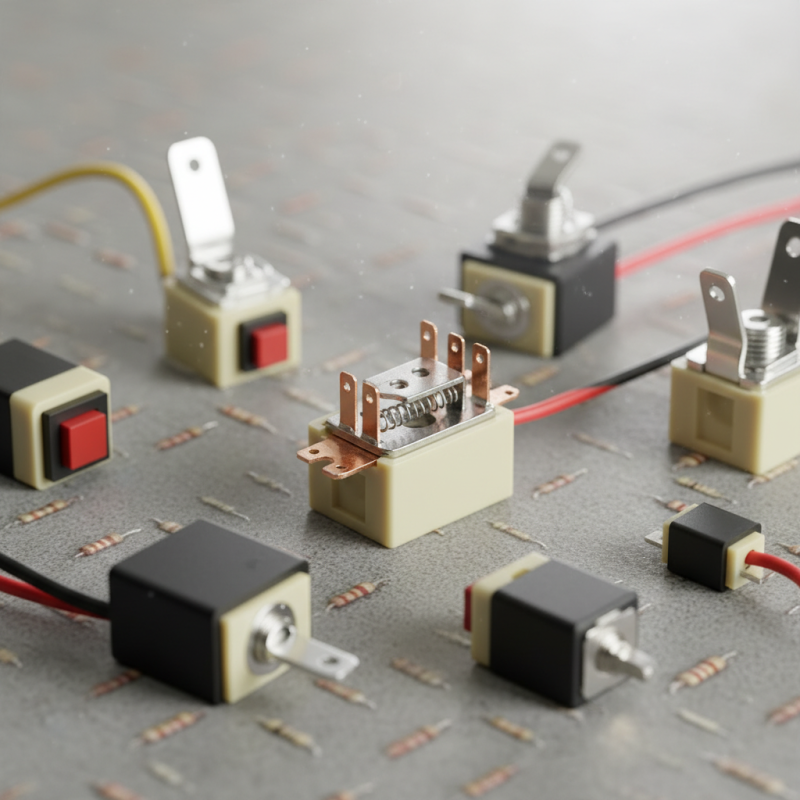
What Are Micro Switches: Definition and Overview
Micro switches are critical components widely used in various applications, from home appliances to industrial machinery. Their compact size makes them ideal for space-constrained environments. According to a recent market report, the global micro switch market is projected to reach $2 billion by 2025, driven by increased demand in automation and safety devices. These switches operate on a simple principle: pressing a lever changes the position of electrical contacts.
Despite their reliability, micro switches can sometimes be prone to wear over time. Their mechanical nature means that repeated use may lead to failure. For instance, in an industrial setting, if a micro switch fails, it could halt production, leading to costly downtime. Data shows that around 30% of maintenance issues in machines are related to these switches.
Micro switches are incredibly versatile. They can be found in elevators, vending machines, and even in gaming consoles. Their ability to quickly change circuits makes them well-suited for safety interlocks or notification systems. However, it's crucial for designers to consider the long-term durability of these components to minimize future problems. Regular maintenance and monitoring can help mitigate some of these challenges.
What Are Micro Switches and How Do They Work?
| Feature | Description |
| Definition | Micro switches are small electromechanical switches that are activated by a specific force applied to the actuator. |
| Operating Principle | They operate on the principle of a snapping action, allowing for rapid transition between on/off states. |
| Common Uses | Used in home appliances, gaming devices, industrial machinery, and safety equipment. |
| Types | Types include single pole, double throw (SPDT), single pole, single throw (SPST), and more specialized variants. |
| Activation Force | Typically requires a low force to activate, often within the range of 1 to 10 ounces. |
| Electrical Ratings | Commonly rated for low voltage applications, usually up to 250V AC or 30V DC. |
| Durability | Designed for long operational life, often rated for millions of cycles. |
| Dimensions | Typically compact, with sizes varying from 10mm to 30mm in actuator length. |
The Mechanism of Micro Switches: How They Operate
Micro switches are essential components in many devices. They operate based on a simple yet effective mechanism. When a lever is pressed, it triggers an internal mechanism that creates a connection between electrical contacts. This connection can either complete a circuit or break it, allowing for precise control over devices.
The design of micro switches enhances their effectiveness. They often have a spring mechanism, which returns the switch to its original position after being activated. This provides a distinct tactile feedback to users. The size of these switches allows them to fit into compact spaces without compromising performance. However, their small size can lead to potential failures if not handled with care.
Understanding how they operate is crucial. If the components within the switch wear down, the switch may fail to function properly. Misalignment or debris can affect their operation. Regular maintenance can help address these issues. It’s evident that while micro switches are reliable, they require a commitment to care and awareness of their limitations.
Types of Micro Switches: A Comparative Analysis
Micro switches are essential components used in various applications, from household appliances to industrial machinery. There are different types of micro switches, each designed for specific functions. Understanding these types helps in selecting the right switch for specific needs. Common classifications include snap-action, momentary, and toggle micro switches. According to industry reports, snap-action switches dominate the market due to their reliability and precision.
The performance of these micro switches varies significantly. Snap-action switches offer faster operations, while momentary switches are ideal for temporary circuits. A comparative analysis reveals that snap-action switches can handle up to 10 million cycles without failure, making them highly durable. According to a 2021 report by the Robotics and Automation Society, 70% of manufacturers prefer snap-action due to its longevity in automation systems.
Design factors also play a crucial role in performance. Some designs may compromise on tactile feedback. This can lead to less user satisfaction. Certainly, balancing cost and quality is challenging. A study noted that cheaper models often wear out quickly, forcing a cycle of replacements. This could cost companies more in the long run.
Applications of Micro Switches in Various Industries
Micro switches play a vital role in many industries. They function as reliable actuators that detect physical motion. These small devices respond to a slight pressure change, activating various systems. In manufacturing, micro switches are used on assembly lines for tasks like quality control. Their precision helps avoid errors during production.
In the automotive sector, micro switches are everywhere. They can be found in car doors, seat belts, and even in ignition systems. Their small size and efficiency make them ideal. Yet, there are risks when they fail. A malfunctioning micro switch can lead to safety issues. Regular maintenance is crucial here.
Tips: Always check your micro switches. Look for signs of wear and tear. This can prevent unexpected failures. In electronic devices, micro switches help save space. They offer a cost-effective solution in compact designs. However, they can sometimes be underutilized. Consider reviewing your current systems. Are you maximizing their potential? Regular evaluations may lead to better efficiency.
Key Specifications and Performance Metrics for Micro Switches
Micro switches are small electrical switches triggered by a very light touch. They are commonly found in various devices, providing a reliable means of controlling electrical circuits. Key specifications for micro switches include actuator type, contact rating, and operating temperature. Actuators can vary widely, influencing how users engage the switch.
Performance metrics matter significantly. The mechanical life of a micro switch indicates how many cycles it can perform before failure. Many micro switches offer impressive longevity, usually over a million operations. However, users sometimes overlook important details, such as the tolerance to vibration and shock, which can affect reliability in certain applications. These factors can lead to unexpected failures in critical systems.
Another essential aspect is the operating force needed to activate the micro switch. This varies between different types and models. Users often assume one standard force works for all applications, but this is not always true. It's crucial to match the micro switch to its specific application for optimal performance. Failure to do so may lead to unwanted interruptions or device malfunctions.